
Are your prospects going cold? Here's why.
I often talk about the importance of sales and marketing working together, and people nod in agreement. I think that the reality is - the principle is mostly understood, but the reality is not happening. It’s not just NZ businesses that have this problem, there’s podcasts, blog posts and webinars about the topic.
Anyone who has grown a business from scratch will recognise that most sales wins at the early stage comes from relationships, word of mouth and referrals, with not much in the way of structured sales and marketing activity. The problem comes when the business starts to scale and needs a more structured approach. What I often see at this stage is that sales and marketing is done in separate silos. There is someone busy doing the marketing activity - the website is updated, case studies and blogs produced, social media content created, and ads running. The sales person is networking, keeping in touch with prospects, and writing proposals.
There’s nothing inherently wrong with any of that - it’s just it could be more efficient, and it is missing opportunities as the way your buyers buy is changing.
Buyers now do most of their evaluation before they talk to anyone. Research from Gartner and CEB puts the figure at around 70% of the buying process is completed before a supplier is contacted. And when a B2B prospect does get to engage with your business, they don’t all buy straight away; they typically need between five and twelve ‘touches’ before they close, according to RAIN Group and HubSpot. Most salespeople in New Zealand give up after one or two. Read more here.
In addition, B2B sales cycles are growing, with 40-60% of B2B deals lost to no decision (i.e. inaction), not to a competitor, The Jolt Effect , and buyer-groups now averaging 13 people looking for consensus, according to Forrester.
There’s gaps all along the ‘customer journey’ from “I haven’t heard of you," to I’m “thinking about buying,” to “your business is on the shortlist,” to being "ready to buy now." The roles that sales and marketing plays will vary - sometimes it’s all marketing, sometimes it’s all sales - but lots of time, you need the two working closely together, and in many scaling businesses I see - this is a missed opportunity.
A Few Examples
I thought it would be useful to bring some of this to life - anonymised to protect the innocent!
The first two examples are from organisations where sales was the predominant mind-set, with marketing seen more as a ‘visibility creator’.
A mid-sized founder-led tech business where the founder is confident in sales, handles most of it personally, and saw marketing as important, but separate - more about the tactics of writing blog articles, LinkedIn posts and promoting lead-gen tools. The gap was that sales outreach with leads and prospects was sporadic, with nothing to keep in touch when the founder was busy.
The second example is a business with a strong sales leader who loves rolling up his sleeves and getting stuck into deal-making.
He was surprised to consider ways a more joined-up approach could help:
Working together to identify the target accounts
Making sure messaging is tailored to that person (their role and business triggers)
Using ‘sales enablement’ tools to shorten the sales cycle, for example case studies and thought leadership content that was deliberately focused on speaking to the business challenge they had
At the opposite end of the spectrum is a business with significant marketing activity - webinars, thought-leadership content and LinkedIn activity. The brand is strong, but there was no approach to building and nurturing the pipeline.
What Good Looks Like
A useful way to think about this is in three tiers, based on how close a prospect is to buying. Regardless of tier, all activity should be targeted at your ideal customer i.e. focused on sector, role, industry, problem etc.
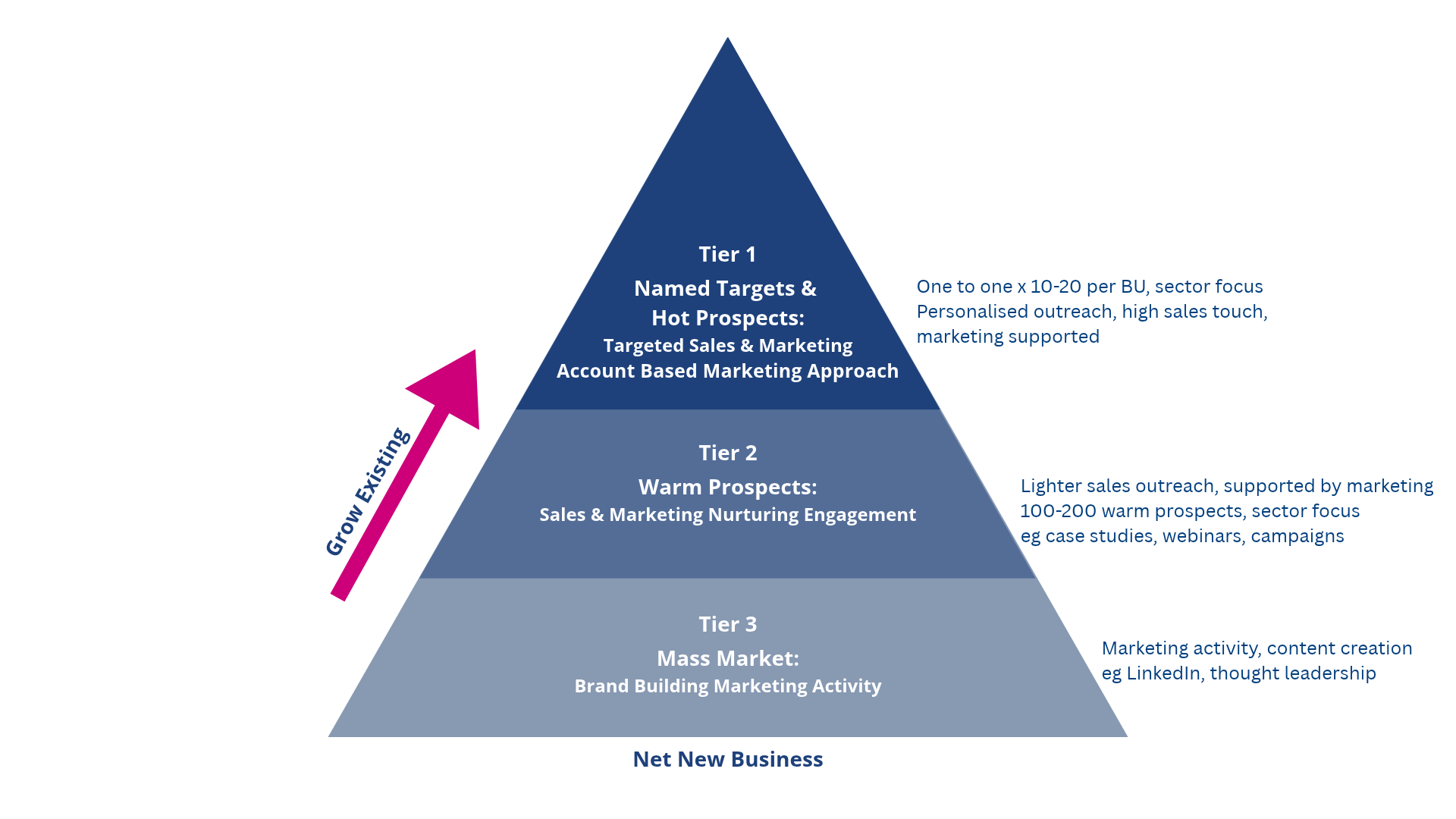
Tier 3: Mass Market
(everyone in your addressable market)
This is your general marketing brand-building activity. It has a longer-term payoff, but is still important, as it’s finding and warming-up tomorrow’s leads.
| Sales Role | Marketing Role |
|---|---|
| Attending conferences and events | Publishing thought leadership that positions you as someone worth listening to in your sector |
| Building visibility on LinkedIn | LinkedIn content that speaks to the problems your ideal clients have, not just what you do |
| Cold calling | Blog posts and articles that show up when a buyer is researching their problem (before they've contacted anyone) |
| Speaking at industry events or contributing to publications your buyers read | |
| Sharing client results and proof points publicly, so your name comes up in peer conversations even before a buyer is looking |
Tier 2: Warm Prospects
(roughly 100–200 contacts, depending on your market)
These are people who know you or have had some interaction with you already - you may have had a sales conversation where they have indicated they are interested, but not for a while; or they may have interacted with one of your pieces of marketing content. The goal is to stay visible and be considered when a buying trigger happens, so marketing work is about “nurturing” and sales is about keeping in touch and building relationships.
| Sales Role | Marketing Role |
|---|---|
| Light-touch, periodic outreach to keep the relationship warm, not just calling when you need a deal | A regular email or newsletter that gives them something useful (not just promoting you) |
| Following up when a prospect engages with something: a webinar, a post, an event | Webinars or events on topics relevant to the problems your ideal clients are solving right now |
| Noticing buying signals: a new hire, a job posting, a funding announcement, a leadership change | Case studies that show results for businesses at a similar stage or with a similar challenge |
| Having a simple system to track where each warm prospect is, so nobody falls through the gaps | Keeping your content relevant to where this group is in their business, not just what you want to sell |
Tier 1: Named Targets
(10–20 businesses per business unit)
This is your ‘Account Based Marketing’ (ABM)* high-touch targets who should have a personalised plan to win.
*ABM - I’ve always found this name a bit of a misnomer, given it is all about a highly tailored joined-up marketing AND sales approach, but that is a conversation for another day!
| Sales Role | Marketing Role |
|---|---|
| Personalised outreach to specific people at the account, not a generic contact | A case study from a business with a similar challenge, sent before or after a key sales conversation |
| Building relationships across multiple stakeholders, not just the main contact | LinkedIn content that speaks to the business problem this account has, so they’re seeing relevant thinking before a call |
| Understanding the account’s specific triggers: growth, a new hire, a funding round, a compliance change | A one-pager or proof point written for their sector or role, not a generic brochure |
| Coordinating timing and content with marketing, so outreach lands when the account has seen something relevant and reinforces the same messaging | Coordinating with sales so content isn’t going out in a vacuum; it’s reinforcing a conversation that’s already happening |
In my experience, Tier 2 ‘nurturing’ is where most B2B scaling businesses have the biggest gaps, with a variation of:
“Oh yes, I meant to follow up with them, but forgot,”, “I didn’t know what to say”, or “they said they’d be ready in a year, so I’ve scheduled a call then.”
Early Stage?
I want to acknowledge, if you're at an early stage, getting out there and talking to people is the best approach. Your wins and beta clients are going to come from your existing network and relationships and formalising your sales and marketing is not yet the priority as you validate the market.
This changes as you scale and want to build volume. You can't personally warm every prospect, or keep track of every buying conversation in your head (well, most people can’t). The touches that can through your own relationships now need a system behind them - this is what joined-up sales and marketing actually means in practice.
Sound Familiar?
If you’re looking at this and thinking “that’s us,” then let’s grab a quick 15 minute conversation to see where you could focus first - book a time here.
Or if you’d rather not talk - the free B2B Growth Audit is a good place to start.
Get In Touch
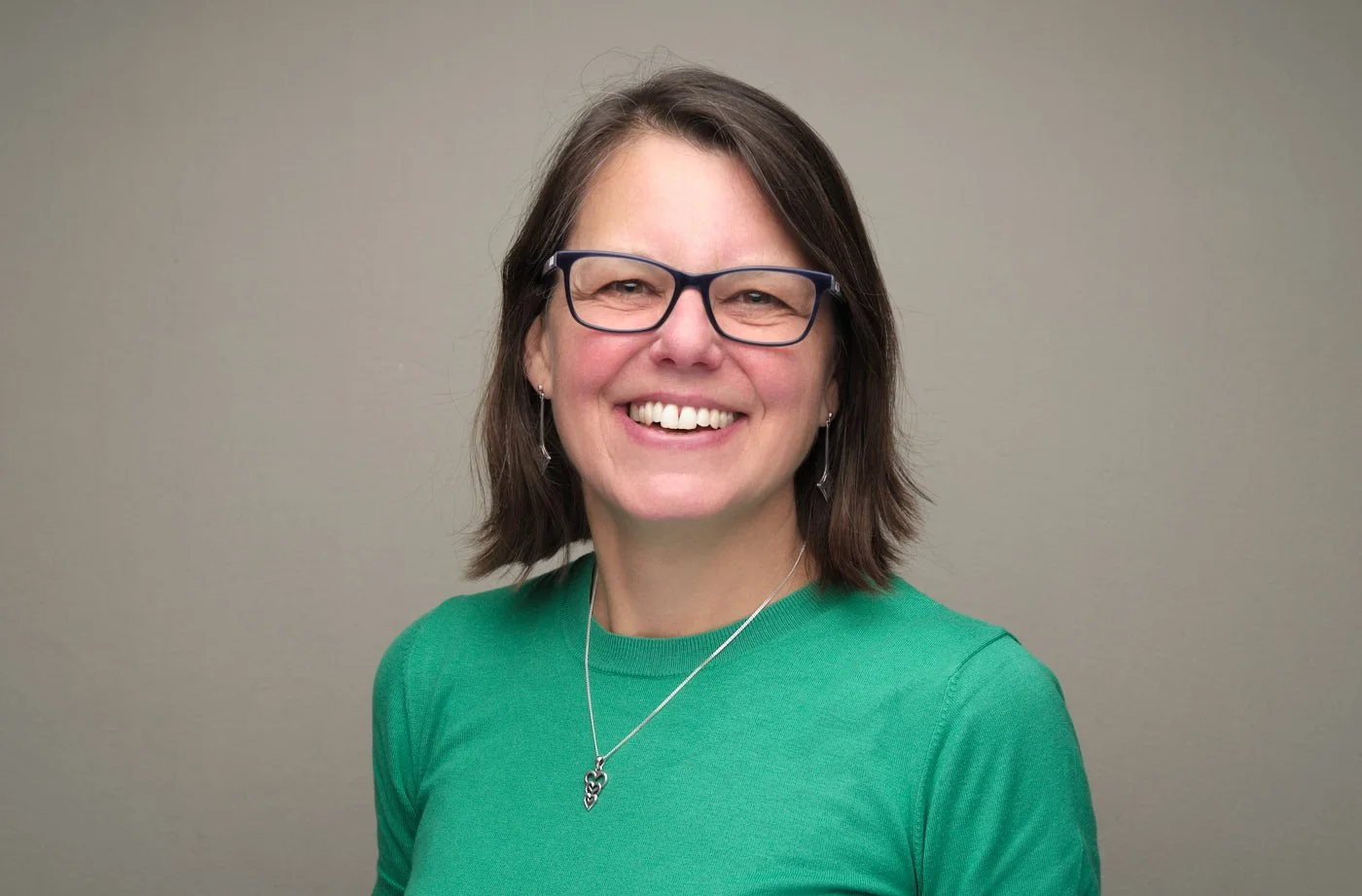
If you’d like me to come and chat with you and waggle my fingers at you - please get in touch. It can sometimes be helpful to have someone who can challenge your thinking and hold you to account.
I provide leadership, support and direction for growing Kiwi tech and innovation companies as your 'fractional' (part-time) Chief Marketing Officer (CMO) - an affordable way to get senior thinking and direction for businesses.
If you could do with some help to grow your business, get in touch
Helen Shorthouse
Fractional Chief Marketing Officer (CMO)
Other blogs on this topic

The B2B Growth Model Has Changed - But Kiwi Businesses Are Not Keeping Up
Having a plan is one thing, but making it happen is a different thing altogether… maybe that’s why so many of our actual ‘New Year’s Resolutions’ fall off so early.